
Considerations Before & During a Mold Transfer
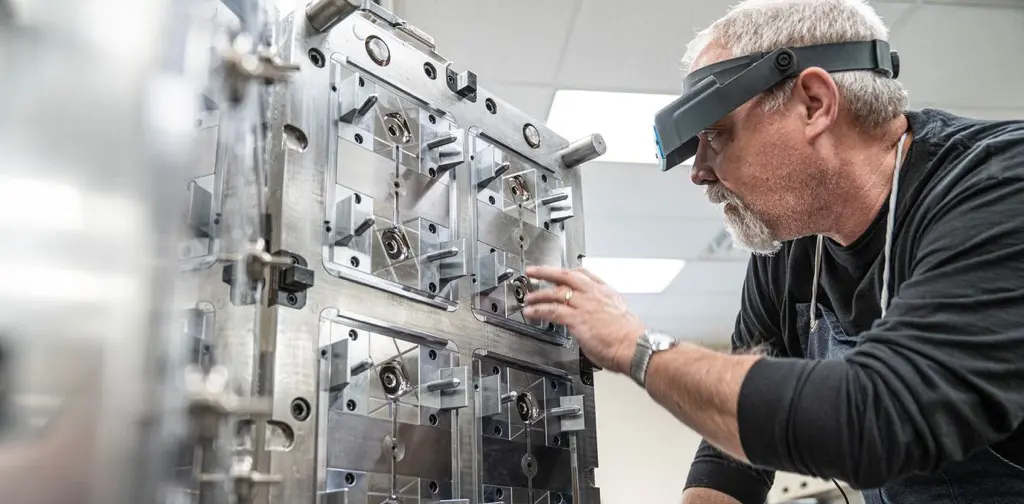
In today’s competitive medical device landscape, Original Equipment Manufacturers (OEMs) face immense pressure to ensure supply chain continuity, product quality, and cost-effectiveness. When an OEM evaluates a mold transfer, moving existing production molds from one injection molder to another, it’s often due to challenges like poor performance, capacity constraints, or the need for higher-quality manufacturing standards.
At Plastikos Inc., we’ve guided numerous medical OEMs through successful mold transfers, exceeding well over 200 transfer molds. While the process may appear straightforward, it’s complex and requires thoughtful planning and expert execution. Below are key considerations every OEM should weigh before initiating a mold transfer.
1. Mold Condition & Maintenance History
Before any mold hits the production floor at a new facility, it’s essential to thoroughly evaluate its physical condition. Many issues that arise post-transfer, such as flash, short shots, dimensional instability can stem from poor maintenance or wear and tear.
- Is the mold clean and free from corrosion?
- Are there visible signs of damage or excessive wear on the tool steel?
- Does the mold come with a maintenance history or service log?
- Is the tool design documentation (2D drawings, 3D models) complete and up to date?
- Are there usable spares that will be transferred with the tools.
At Plastikos, our in-house mold evaluation process includes a complete diagnostic of each transferred tool, ensuring compatibility with our equipment and quality standards before validation begins.
2. Product Quality & Regulatory Compliance
In medical molding, quality isn’t optional, it’s regulatory. Transferring a mold must not introduce variability that could jeopardize FDA or ISO compliance. This is especially critical for parts with tight tolerances, Class II/III devices, or products involving biocompatible materials.
- Establish a robust validation process (IQ, OQ, PQ).
- Confirm the new molder can meet cleanroom and traceability requirements.
- Evaluate in-process inspection and final part verification protocols.
With Plastikos’ ISO 13485-certified quality system and Class 8 and Class 7 cleanrooms environment, OEMs can expect best-in-class compliance and product repeatability.
3. Communication & Project Management
Successful mold transfers are built on proactive communication. A transfer is not just about moving a tool, it’s a comprehensive onboarding process that involves engineering, quality, and operations teams.
- Dedicated project managers to oversee the transition.
- Clear transfer timelines with reasonable timelines to complete mold debug, FOT, FAIR, etc.
- Open, transparent communication from quote to validation. If there are additional costs associated with new steel, additional sampling, etc. Both parties need to have that clear line of communication.
Our experienced Program Management team at Plastikos acts as an extension of the OEM’s internal operations, ensuring critical milestones are met and unexpected challenges are resolved swiftly.
4. Cost Analysis: Hidden and Ongoing
While cost reduction is often a motivator for transferring a mold, the true cost of ownership includes much more than the piece part price.
- Cost to repair, refurbish, or modify the tool.
- Downtime during transfer and revalidation.
- Potential material changes or mold requalification needs.
- Long-term production efficiency at the new site.
Our technical team conducts a full DFM (Design for Manufacturability) and ROI analysis to ensure the mold’s production cost aligns with your long-term business objectives.
5. Material, Process, and Documentation Compatibility
A successful transfer demands more than just tooling expertise, it requires extensive process knowledge. Material handling, drying requirements, and machine compatibility can all impact performance.
- Review all resin specifications and material certs.
- Match molding machine tonnage, barrel capacity, and controls.
- Ensure all historical process parameters and inspection criteria are transferred accurately.
At Plastikos, we complete a thorough Scientific Molding process with one of our RJG trained engineers. If improvements to cycle time, packaging, and overall efficiency can be gained through these efforts, then we can review with clients on any opportunities to share in cost-savings.
Final Thoughts
Mold transfers carry both risk and opportunity. With the right partner, OEMs can turn a difficult situation into a strategic advantage, enhancing part quality, reducing cost over time, and securing a more dependable supply chain.
Plastikos Inc. brings decades of experience in precision medical molding and mold transfer execution. Whether you’re looking to move one tool or your entire product family, we have the expertise, infrastructure, and commitment to make your transition seamless.
Interested in learning more about how we manage mold transfers? Reach out to our technical team today to start the conversation.

- ISO 13485
- ISO 9001
- ISO 14001



© Copyright Plastikos, Inc. 2026